Washington April 12,2026
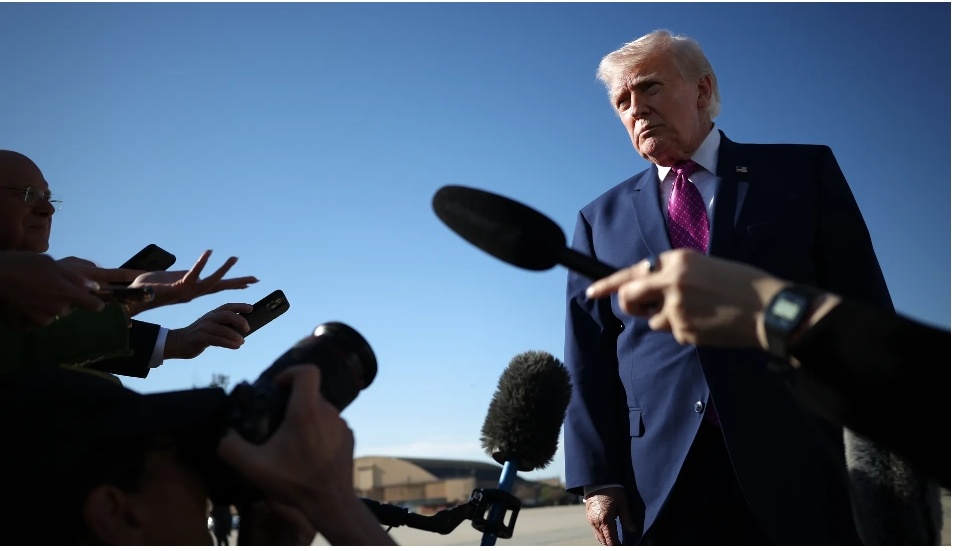
n a dramatic escalation of tensions, Donald Trump has declared that the United States will begin blocking “any and all ships” attempting to enter or exit the strategically vital Strait of Hormuz. The announcement came after high-stakes negotiations between Washington and Iran collapsed on Sunday without any agreement, triggering fears of a major global crisis.
Trump’s aggressive directive includes orders to the U.S. Navy to intercept vessels in international waters that have reportedly paid transit tolls to Iran. This unprecedented move signals a sharp tightening of economic and military pressure on Tehran, effectively weaponizing one of the world’s most critical maritime trade routes.
The Strait of Hormuz, a narrow passage connecting the Persian Gulf to global markets, handles nearly a fifth of the world’s oil shipments. Any disruption in this corridor could send shockwaves through international energy markets, potentially spiking crude prices and destabilizing economies already grappling with uncertainty.
Iran has yet to officially respond to Trump’s latest warning, but analysts expect a strong reaction. Tehran has long maintained that it has the right to control and protect its territorial waters, and any attempt to enforce a blockade could be viewed as an act of provocation or even war.
Global powers are watching the situation closely, with concerns mounting over the risk of military confrontation in an already volatile region. Key stakeholders, including European and Asian economies heavily dependent on Gulf oil supplies, are likely to push for urgent diplomatic intervention to prevent further escalation
. As tensions soar, the world braces for potential fallout from what could become one of the most dangerous standoffs in recent years. With both sides showing little sign of backing down, the situation in the Strait of Hormuz is rapidly evolving into a flashpoint with far-reaching global consequences.








Comments
Sign in with Google to comment.