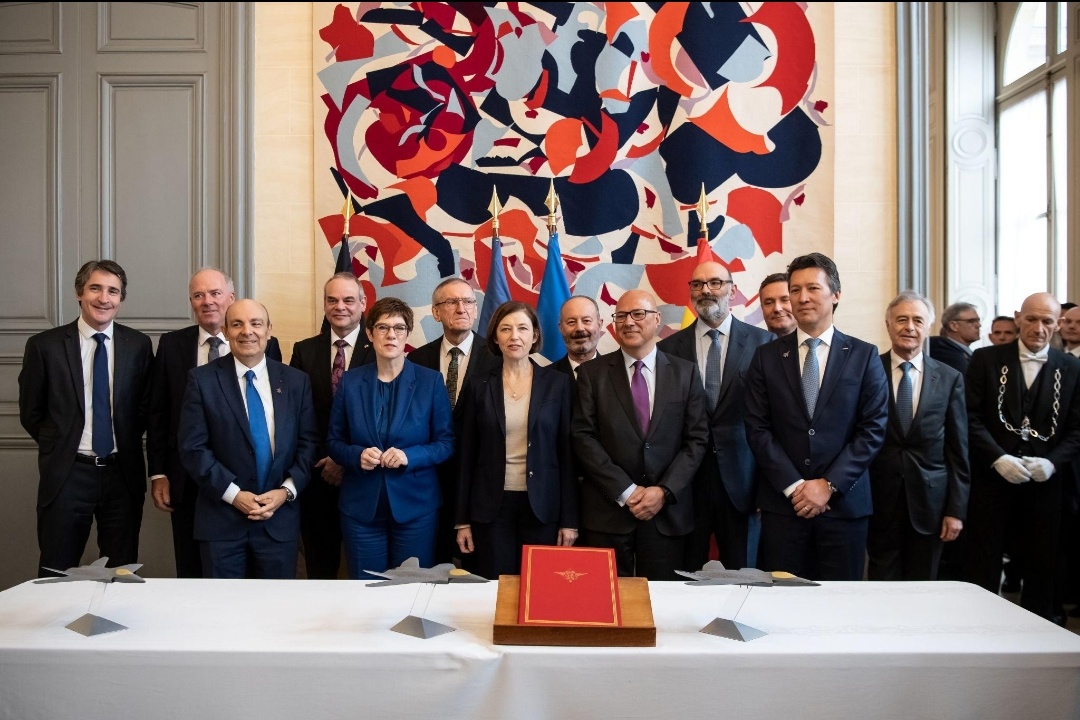
Dateline: Paris/Berlin — April 19, 2026
Europe’s ambitious next-generation fighter jet programme, the Future Combat Air System (FCAS), has plunged into fresh uncertainty after mediation efforts between key industrial partners collapsed. The deadlock, first reported by Handelsblatt, exposes widening cracks between French and German stakeholders, raising serious questions about the future of one of Europe’s most critical defence projects.
At the heart of the dispute are tensions between major players such as Dassault Aviation and Airbus, who are locked in a fierce battle over intellectual property rights, leadership roles, and workshare distribution. The failed mediation signals that corporate rivalries are now overriding strategic unity, threatening to derail timelines and inflate costs in a project already plagued by delays.
The FCAS programme, backed by the governments of France, Germany, and Spain, is intended to deliver a cutting-edge sixth-generation fighter jet to replace ageing fleets by 2040. However, insiders warn that the latest breakdown could push the programme closer to fragmentation, with each nation potentially reconsidering its commitments if industrial disputes remain unresolved.
Despite the setback, political leaders still hold the power to intervene and salvage the programme. High-level negotiations between Paris and Berlin could force a compromise, but patience is wearing thin as defence priorities shift amid rising global tensions. Failure to act decisively could not only cripple FCAS but also damage Europe’s credibility in developing independent military capabilities.
As tensions escalate, the FCAS saga is fast becoming a symbol of Europe’s struggle to balance national interests with collective defence ambitions. Without urgent political intervention, what was once hailed as a flagship project for European unity risks collapsing under the weight of corporate infighting and strategic indecision.















Comments
Sign in with Google to comment.